| A
major restoration project like Woodchester Villa is possible
only in a community with a lively interest in its own past.
At the beginning of 1978 only
Bracebridge, of all the major towns of Muskoka, had no centre
for the preservation and study of its history. Obviously,
Bracebridge's history had been preserved in well maintained
residences and public buildings as well as in private
collections and in the books of local historians; but the town
had not yet found the means to display and interpret the
artifacts and documents in which the daily life of the past is
found.
At the urging of Ken Black who recognized the historical
importance and the potential in the site, the Bracebridge Rotary
Club expressed an interest in restoring
the property for public use.
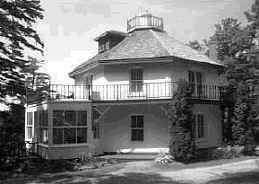
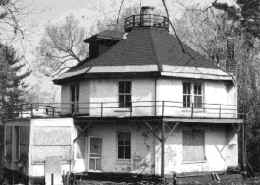
Woodchester was, and is, a
perfect setting for a museum. Not only was its builder an
important and colourful figure in the town's history, but the
house itself is one of the oldest residences in Bracebridge and
one of the earliest examples in Ontario of poured concrete
construction.
Its unusual shape, pleasing
proportions and curious features make it architecturally very
interesting and its importance has been noted by John Rempel and
other Ontario architectural historians. Its setting, close to
the centre of town with its own park, on a hill overlooking the
top of the falls, is superb. Furthermore, on the same property
stood the shell of Bracebridge's first church building which
might be restored. Inquires confirmed that substantial provincial
grants were available for such a restoration project.
All these factors pointed to
Woodchester Villa as a possible museum for Bracebridge. The
question was whether there was sufficient community interest in
such a project and whether a group could be formed strong
enough to undertake the many tasks of design and
operation.
In 1977, the Rotary Club wrote a letter to the
Bracebridge Town Council requesting that the former home of the late
Henry J. Bird and his family be officially designated as a building of
historical and architectural value.
The Council of the day readily
agreed and in due course passed a by-law to declare Woodchester Villa
historic and the Bracebridge Rotary Club began the process of
acquiring the property. By June of 1978, the Bracebridge Rotary Club made a conditional
offer to purchase the house and property which included an old church
built in 1886 that was the first church building in
Bracebridge. Already familiar with the distinctive
architecture of the house, the Ontario Heritage Foundation encouraged
the restoration of Woodchester Villa largely to what it had been at an
earlier period.
While all factors pointed to
Woodchester Villa as a possible museum, there was the question of
whether enough community interest existed to support the project and
whether a group could be formed to be responsible for the on-going task
of administering the site. In the spring of 1978, organizational
meetings were called and the response to them was sufficient to
proceed.
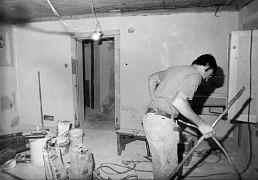
During these early stages of
planning, generous moral support and practical assistance came
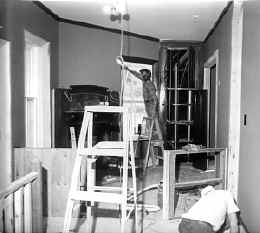
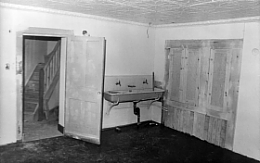
from the community. Through many meetings, an authentic
restoration plan was created to meet the rigorous standards
necessary for grants. Architectural design and supervision was
done and local firms and individuals were employed for the
actual construction. Financial assistance came from all parts of the community and the Town
of Bracebridge as well as grants from the Provincial Government of
Ontario.
On March 13, 1980, the
Bracebridge Rotary
Club of Bracebridge turned over the keys to Woodchester Villa to the
Mayor of Bracebridge. Then, on June 22, 1980, Woodchester Villa was
opened as a community-based public museum.
Bracebridge is indebted to the
Bracebridge Rotary Club, the Bracebridge Town Council and the many
people who had the foresight and initiative to transform Woodchester
Villa into a community museum where the past meets the present.
|